Rabu, 4 September 2013

Suara Sri Andalas

Suara Sri Andalas


Naik Minyak: Kerajaan Ulangi Janji Tidak Tertunai 7 Tahun Lalu

Posted: 04 Sep 2013 02:30 AM PDT

Tujuh tahun lalu, iaitu pada tahun 2006, ketika menaikkan harga minyak, kerajaan pernah membuat janji yang sama dengan apa yang dibuat oleh Timbalan Menteri Kewangan Datuk Ahmad Maslan hari ini.

Ketika itu, kerajaan berjanji akan menggunakan penjimatan RM4.3 bilion dari kenaikan harga minyak untuk meningkatkan taraf pengangkutan awam di negara ini.

Namun, ia tidak pernah dilaksanakan. Pengangkutan awam di negara ini tetap pada kadar yang sama di mana rakyat tidak boleh bergantung kepadanya.

Jalan raya di Malaysia penuh dengan kenderaan persendirian dan kesesakan berlaku di mana-mana kerana jalan raya penuh dengan kenderaan.

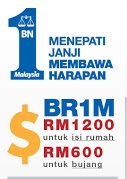
Hari ini, Putrajaya berjanji akan menggunakan sebahagian hasil daripada potongan subsidi minyak sebagai ganjaran kepada penduduk luar bandar yang membantu mengekalkan kuasa Barisan Nasional (BN) pada pilihan raya lalu, melalui pemberian Bantuan Rakyat 1 Malaysia (BR1M), kata Datuk Ahmad Maslan.

Timbalan Menteri Kewangan itu berkata, kerajaan juga sedang melihat cara membangunkan kawasan berkenaan.

"Lebihan itu akan diagihkan ke banyak kawasan. Kerajaan akan memfokuskan kepada pembangunan kawasan pedalaman," katanya di Kuala Lumpur hari ini.

Datuk Seri Najib Razak Isnin lalu mengumumkan kerajaan akan menjimatkan sejumlah RM3.3 bilion setahun selepas menurangkan subsidi minyak.

Perdana menteri membuat keputusan untuk menaikkan harga minyak RON95 dan diesel sebanyak 20 sen seliter, sebagai langkah bagi mengurangkan defisit fiskal.

Pada tahun 2006, kerajaan naikkan harga minyak 30 sen. Hasilnya, kerajaan dapat RM4.3 bilion darinya.

Apabila ditekan rakyat, kerajaan berjanji ia akan digunakan untuk pengangkutan awam.

Dalam Debat Datuk Seri Anwar Ibrahim dan Datuk Ahmad Shabery Cheek bertajuk "Hari Ini Membentuk Kerajaan, Esok Turun Harga Minyak" pada 15 Julai 2008 di Dewan Bahasa dan Pustaka (DBP), Shabery ditanyakan soalan itu.

Mengikut jawapan di Parlimen sebelum itu, kerajaan baru belanjakan RM834.75 juta untuk prasarana pengangkutan sejak dari tarikh itu.

"Kenapa perkara ini berlaku? Dengan kenaikan kali ini pula, kerajaan boleh jimatkan RM13 bilion. Jika RM4.3 bilion kerajaan terkial-kial membelanjakannya, apa jaminan kerajaan dalam membelanjakan wang dari penjimatan RM13 bilion ini?" tanya penulis selaku wakil Anwar, dalam debat itu kepada Shabery.

Soalan itu dibuat berdasarkan perbandingan yang dibuat dari janji kerajaan ketika menaikkan harga minyak pada tahun 2006 lalu.

Penjimatan sebanyak RM4.3 bilion itu katanya untuk mempertingkatkan prestasi pengangkutan awam di negara ini.

Namun, ketika itu Shabery tidak langsung menjawab soalan itu.

Beliau mengambil sikap menyerang pihak yang bertanya soalan dengan kononnya wartawan itu tidak mengikuti isu semasa dengan baik.

Sumber: TheMalaysianInsider

RON97 Naik 15 Sen Mulai Tengah Malam Ini

Posted: 04 Sep 2013 02:00 AM PDT

Harga jualan runcit petrol RON97 di seluruh negara naik 15 sen seliter kepada RM2.85 seliter berbanding RM2.70 seliter berkuatkuasa tengah malam ini.

Perkara tersebut disahkan oleh presiden Persatuan Pengusaha Petroleum Perak, Lee Chee Seng, ketika dihubungi Malaysiakini sebentar tadi.

Kenaikan itu lebih rendah berbanding peningkatan 20 sen untuk harga diesel dan petrol RON95 yang diumumkan kerajaan semalam.

Harga pasaran RON97 pada kebiasaannya ditentukan secara "apungan terurus" yang melibatkan perubahan mengikut faktor pasaran dan tidak melibatkan subsidi kerajaan.

Kerajaan menetapkan subsidi sebanyak 63 sen seliter untuk RON95 dan 80 sen seliter untuk diesel.

Ini merupakan peningkatan harga pertama untuk petrol RON97 selepas harga runcitnya meningkat 20 sen pada Mac lalu.

Harga runcit berkenaan turun 20 sen selepas pilihan raya 5 Mei.

Harga RON97 mencatat paras tertinggi RM3 selitar pada September 2012.


Sumber: MalaysiaKini

Anwar Ibrahim

Anwar Ibrahim


[PROGRAM] Muslim Brotherhood: A Discourse

Posted: 03 Sep 2013 08:03 PM PDT

1185300_10151650403426840_671161499_n

Anak Muda Kampung Nak Senang

Anak Muda Kampung Nak Senang


Tambang bas dijangka naik 30 peratus

Posted: 04 Sep 2013 07:10 AM PDT

4 Sep 2013 - Kenaikan 20 sen bagi petrol RON 95 dan diesel dijangka menyebabkan pengguna perlu membayar tambang yang lebih tinggi kerana kos operasi pengangkutan awam dijangka turut mengalami peningkatan, menurut beberapa pengusaha pengangkutan awam di negara ini.

Persatuan Pengusaha Bas Pan Malaysian, yang mempunyai 130 ahli di seluruh negara mengjangkakan tambang akan naik secara berperingkat dengan bus ekspres dijangka mencatatkan kenaikan sebanyak 5 peratus dan 30 peratus dalam masa terdekat.

Sementara itu, Persatuan Pengusaha Lori Selangor dan Kuala Lumpur berkata kos diesel merupakan 30 hingga 40 peratus daripada perbelanjaan keseluruhan ahli-ahlinya.

Justeru, kenaikan harga bahan api akan meningkatkan kos operasi mereka sebanyak 5 hingga 8 peratus, kata Setiausaha Agungnya, Alvin Choong.

Selasa, 3 September 2013

Suara Sri Andalas

Suara Sri Andalas


Pakatan: Fuel Hike Only the Beginning

Posted: 03 Sep 2013 05:34 AM PDT

PETALING JAYA: Last night's increase in price of RON 95 and diesel by 20 sen per litre is just the beginning of more to come, now that Barisan Nasional (BN) has secured its mandate, Pakatan Rakyat said today.

Opposition leaders said Malaysians would feel an even harder pinch in the next few months as electricity tariff was expected to go up and the controversial Goods and Services Tax (GST) introduced.

PAS vice-president Salahuddin Ayub said this would be on top of the expected rise in the price of goods, initiated by manufacturers forced to cushion the increase in fuel prices.

"I'm worried that this may lead to escalating crime, as the lower class scramble to manage higher cost of living while their income remains stagnant," the former Kubang Kerian MP told FMT.


Prime Minister Najib Tun Razak had vowed that the government would increase the Bantuan Rakyat 1Malaysia (BR1M) payouts to ensure low-income families were not burdened by the fuel hike.

DAP's Serdang MP Ong Kian Ming said even the cash aid was not enough to counter the increase in the price of goods, electricity tariff and GST.

"BR1M will not cushion all the increases in price that we expect in the next three or four months. I doubt the BRIM payout will be RM1,000 as promised.

"It will more likely be RM700, an increase of RM200 and that is not sufficient," he said.

Salahuddin believed the government had raised the fuel price to compensate for the billions it lost and would continue to lose over the BR1M cash vouchers.

Some 6.8 million households and unmarried individuals were beneficiaries of the BR1M 2.0 aid early this year, with up to RM2.9 billion disbursed by the government.

Najib had said that by slashing the fuel subsidies to 63 sen per litre for RON95 and 80 sen per litre for diesel, the government will save at least RM1.1 billion.

"The government may use the excuse that they want to reduce subsidies, which should not be the philosophy of a government that has the made the rakyat's welfare its priority," said Salahuddin.

The PAS leader also believed the timing of the fuel hike – four months after the general election – was deliberate in order to avoid voter backlash at the ballot box.

"I hope the rakyat can see clearly now that while Pakatan Rakyat offered to reduce petrol prices should it win the election, BN, in contrast, has hiked up the price," he said.

Ong said BN could rely on other methods to manage the government's finances better, without burdening the rakyat.

"They can reduce unnecessary expenditure in the budget, rather than increasing our cost of living," said the professor.

"They can also raise revenue by having open tenders for major projects such as the Tun Razak exchange and the 1Malaysia Development Berhad (1MDB) project. There are so many other alternatives but at this point, reducing subsidies is unnecessary."


Source: FreeMalaysiaToday

MP: Lebih Banyak Kematian Jalan Raya Jika Harga Minyak Naik

Posted: 03 Sep 2013 05:29 AM PDT

MP DAP Liew Chin Tong berkata kenaikan harga petrol sebanyak 20 sen melalui pengurangan subsidi akan menyebabkan lebih ramai pemandu kereta beralih untuk mengguna motosikal dan seterusnya menyumbang kepada lebih banyak kemalangan maut.

petrol station queue price hike 020913 Beliau memberi alasan, jumlah kemalangan maut melibatkan motosikal adalah tiga kali lebih tinggi dari kemalangan melibatkan kereta, enam kali lebih tinggi berbanding pejalan kaki dan 50 kali lebih tinggi berbanding penumpang bas.

Beliau memetik kajian yang dijalankan satu badan antarabangsa International Association of Traffic and Safety Sciences yang menyebut rakyat Malaysia bertindak demikian ekoran kenaikan harga minyak antara Mac 2006 hingga 2008 – menyebabkan lebih banyak kematian pengguna motosikal.


"Satu bencana kepada manusia dalam bentuk kematian pengguna motosikal bakal berlaku, ekoran kenaikan terbaru harga petrol," katanya dalam satu kenyataan hari ini.

NONEMenurut Liew, kerajaan perlu memikul tanggungjawab sekiranya jumlah kemalangan jalan raya meningkat lebih tinggi susulan kenaikan harga bahan api berkenaan memandangkan rakyat Malaysia tiada alternatif lain.

"Di negara lain di mana khidmat pengangkutan awam disediakan dengan memadai dan cekap, kenaikan harga petrol akan menggalakkan pemandu kenderaan persendirian beralih kepada pengangkutan awam/

"Bagaimanapun, dalam kes Malaysia, setiap kenaikan harga bermakna lebih banyak kematian di jalanan," katanya.

Beliau mendakwa, keadaan di Malaysia tidak banyak berubah walau kerajaan memperuntukkan RM4.4 bilion pada Mac 2006 untuk menambahbaik perkhidmatan pengangkutan awam.

Sumber: MalaysiaKini

Jangan Kata Kenaikan Tidak Beban Pengguna - Fomca

Posted: 03 Sep 2013 05:26 AM PDT

KUALA LUMPUR: Kesan berganda ekoran kenaikan harga petrol RON95 dan diesel, hari ini memang tidak dapat dielakkan apabila kebanyakan sektor perkhidmatan berhubung kait antara satu sama lain.

Bukan sahaja perkhidmatan berkaitan petrol seperti tambang bas akan meningkat naik, segala perkhidmatan lain turut terkesan dengan kenaikan ini, tegas Timbalan Presiden Fomca, Muhammad Sha'ani Abdullah.

Bercakap kepada Harakahdaily, hari ini Sha'ani berkata industri petroleum dan diesel merupakan satu sumber yang berkait rapat dengan setiap rangkaian perkhidmatan.

"Tentunya kenaikan ini menyebabkan berlakunya rantaian limpahan berganda kepada setiap perkhidmatan apabila kosnya dinaikkan. Ia satu fenomena yang tidak dapat dielakkan," tegas beliau.

Namun, katanya kerajaan tidak boleh menimbulkan kemarahan di kalangan pengguna dengan mengatakan kenaikan ini tidak memberi kesan dan tidak membebankan pengguna.

Alasan tersebut, katanya ibarat memperbodohkan pengguna, sedangkan pengguna yang terpaksa menghadapi bebanan terhadap kos sara hidup yang meningkat.


Sebaliknya, kata Sha'ani kerajaan boleh mewujudkan situasi menang-menang, sama ada kepada pengusaha dan pengguna.

Kerajaan juga, katanya boleh memberi penjimatan yang berterusan dalam urusan tadbir negara, sebelum meminta rakyat melakukan penjimatan.

"Apa guna kita bercakap tiada peruntukan mencukupi untuk biasiswa, tetapi dalam masa sama kita bermewah-mewah mengadakan rumah terbuka. Jika mahu rakyat berjimat, kerajaan perlu tunjukkan contoh terlebih dahulu," tegas beliau.


Sumber: HarakahDaily

Kesatuan Pengangkutan Jangka Harga Barang Naik Mendadak Dalam Sebulan

Posted: 03 Sep 2013 05:23 AM PDT

SHAH ALAM 3 SEPT: Kesatuan Kebangsaan Pekerja-pekerja Perusahaan Alat-alat Pengangkutan dan Sekutu menjangka kenaikan harga barang berleluasa dalam masa kurang sebulan berikutan peningkat kos pengangkutan.

Setiausaha Eksekutif kesatuan itu, Syed Shahir Syed Mohamud, berkata kenaikan itu berlaku apabila kos petroleum melibatkan banyak peringkat dalam pengeluaran sesuatu barang.

"Rakyat kena bersedia, tak berapa lama sahaja lagi, mungkin kurang sebulan akan menyebabkan kenaikan harga barang lain sebab petroleum melibatkan banyak peringkat," katanya.

Kenaikan harga petrol RON 95 dan diesel sebanyak 20 sen yang berkuat kuasa hari ini sudah dijangka Pakatan Rakyat.


Hal ini tidak akan berlaku jika Pakatan yang menawarkan penurunan harga minyak dalam tempoh 24 jam sebaik sahaja membentuk kerajaan jika menang PRU 13.

Bagaimanapun, BN yang pernah berjanji tidak akan menaikkan harga minyak jika menang, mungkir janji kurang lima bulan selepas mencatat kemenangan tipis.

"Kita memang jangka minyak akan naik jika BN menang. Kita nasihati pengundi jangan tersalah pilih tetapi ada pengundi 'memilih' untuk (harga) minyak naik," kata Senator Dewan Negara itu kepada TV Selangor.

Sumber: Selangorku

Surcaj Bahan Api Kargo Naik Ekoran Harga Minyak

Posted: 03 Sep 2013 05:21 AM PDT

Syarikat pengangkutan kontena Taipanco Sdn Bhd akan menaikkan surcaj bahan api kargo daripada kadar tarif 16.19 peratus kepada 18.2 peratus, sebagai kesan daripada kenaikkan terbaru diesel sebanyak 20sen yang bermula tengah malam tadi.

"Kadar pengangkutan berbeza mengikut kawasan. Tetapi secara umum,  kadarnya RM100, ini bermakna pelanggan harus membayar tambahan RM18.20 untuk Faktor Penyelarasan Bahan Api (FAF)," kata Naib Presiden Association of Malaysian Hauliers.

"Ketika harga diesel sebanyak RM1.80 seliter, mereka membayar RM16.19. Kami akan maklumkan pelanggan kami tentang FAF baru hari ini."


Ketika dihubungi, Nazari berkata, jadual FAF ditetapkan oleh industri itu semasa pentadbiran Tun Abdullah Ahmad Badawi, yang membawa kepada turun naik harga minyak kerana pengurangan subsidi.

Bagaimanapun, Nazari, yang syarikatnya mendepani perniagaan itu di Pelabuhan Klang menegaskan, terpulang kepada syarikat masing-masing untuk menentukan kadarnya kerana industri itu diselia oleh Akta Persaingan 2010.

Harga diesel sekarang RM2 seliter manakala petrol RON95 2.10 untuk seliter.


Sumber: MalaysiaKini

Pengendali Bas Mahu Tambang Naik

Posted: 03 Sep 2013 05:18 AM PDT

Persatuan pengendali bas kini mahu harga tambang disemak semula ekoran tindakan kerajaan menaikkan harga minyak petrol RON95 dan diesel mulai tengah malam tadi.

Presiden Persatuan Pengusaha Bas Seluruh Malaysia (PMBOA) Datuk Mohamad Ashfar Ali berkata, tambang itu mesti diselaraskan semula atau ia akan menjejaskan industri itu.


Bagaimanapun, pengendali masih memerlukan kelulusan kerajaan sebelum ia dapat dinaikkan.

'Di Malaysia, harga bas dikawal oleh kerajaan. Kita tidak boleh sewenang-wenangnya menaikkan tambang bas.... 

"Kami sudah mohon peningkatan 30 peratus tambang bas pada Mei tetapi kerajaan belum meluluskannya," katanya.

Kerajaan hanya meluluskan 10 peratus surcaj untuk bas ekspres semasa musim perayaan antara 8 Julai hingga 8 September.

Mohamad Ashfar juga menggesa kerajaan menaikkan subsidi diesel antara 1,400 hingga 3,000 liter sebulan untuk bas henti-henti dan antara 2,800 hingg 5,000 liter untuk bas ekspres.


Sumber: MalaysiaKini

Rugi RM1.05 Pada Setiap Pengisian Minyak RM10

Posted: 03 Sep 2013 05:14 AM PDT


KUALA LUMPUR: Pada kadar baru petrol RM2.10 seliter, bermula hari ini pengguna hanya mendapat 4.762 liter bagi setiap pengisian RM10.

Berbanding sebelum kenaikan iaitu pada kadar RM1.90 seliter, pengguna menikmati 5.263 liter petrol bagi pembelian kadar serupa.

Ini bermakna, dengan pengisian RM10 bermula hari ini, pengguna kehilangan 0.501 liter berbanding semalam.

Harga bagi 0.501 liter, jika pada kadar semalam adalah RM1.05.

Ini bermakna bermula hari ini, pengguna kehilangan nilai ringgit yang dibelanja sebanyak RM1.05 bagi setiap RM10 pengisian petrol mereka.


RM1.05, apabila didarab dengan 30 hari (sebulan), bersamaan RM31.05.

RM31.05 didarab pula dengan 12 bulan (setahun), pengguna akan kerugian RM378 setahun.

Itu jika mengandaikan pengguna mengisi petrol RM10 sehari. Jika pengguna mengisi lebih dari RM10, lebih banyak kerugian yang dialami.


Sumber: HarakahDaily

Kilang Buang Minyak Ke Sungai Selangor Dikenakan 14 Kompaun

Posted: 03 Sep 2013 05:10 AM PDT

RAWANG, 3 SEPT : Kilang yang didakwa bertanggungjawab ke atas gangguan bekalan air di beberapa kawasan di Lembah Klang dikenakan 14 kompaun berjumlah RM34,000 kerana tidak mematuhi syarat pembuangan sisa pepejal.

Selain itu juga, Kilang itu juga didapati bersalah kerana menjalankan perniagaan tanpa lesen selama 10 tahun.

"Mereka mempermainkan kita dengan mengatakan kilang ini hanya berfungsi sebagai tempat penyimpanan lori, tetapi apabila kita buat serbuan, banyak aktiviti berlaku di sini.

"Pemilik kilang juga adalah kontraktor persendirian di mana dia membawa sampah domestik ke sini untuk diasingkan sebelum dikitar semula," kata Penolong Pegawai Penguatkuasa MPS, Paramasivam Chelliah.


Menurut beliau lagi, selain MPS, pihak kilang juga berhadapan tindakan daripada Lembaga Air Selangor (Luas), Pejabat Tanah dan Daerah serta Jabatan Alam Sekitar (JAS) Selangor.

Antara kesalahan yang juga dikenalpasti adalah struktur bangunan tidak menepati spesifikasi. Kilang terbabit pernah disaman sebelum ini atas kesalahan gangguan bau berdasarkan aduan daripada penduduk setempat.

Pihak berkuasa tempatan bertindak pantas menyita kilang tersebut pada 31 Ogos lalu. Selain disita, 20 barangan turut dirampas seperti alatan kimpalan dan dua lori tangki yang mengandungi minyak hitam.

Anggota penguatkuasa ditempatkan bagi memastikan tiada operasi berlangsung sehingga proses pemutihan dilakukan.

"Kami haramkan segala aktiviti dan melarang keras lori daripada masuk ke kawasan ini berdasarkan arahan daripada Setiausaha Kerajaan Negeri (SUK) sendiri," kata Paramasivam.

"Kita akan terus menyita tempat ini sehingga arahan pelepasan dikeluarkan daripada Yang Dipertua MPS sendiri," tegas beliau.


Sumber: Selangorku

Anwar Ibrahim

Anwar Ibrahim


First They Came For The Islamists

Posted: 03 Sep 2013 08:14 AM PDT

Foreign Affairs

Egypt's Tunisian Future

 Koplow

Former Tunisian President Zine el-Abidine Ben Ali in Argentina, 1997 (Courtesy Reuters)

An Islamist political party does well at the polls, and an authoritarian regime goes after it with a vengeance, killing its activists and arresting its leaders. The party is driven underground while secularists and other political groups applaud the government's harsh measures, all taken in the name of eliminating a terrorist threat. Meanwhile, the regime and the non-Islamist parties assure the world that once the Islamists have been dealt with, the regular political process will resume again.

So it has happened in Egypt, but it is also the story of Tunisia in the late 1980s and early 1990s, when hopes for a democratic transition were smashed after a campaign of repression that first targeted Islamists but eventually grew into a much wider effort to eliminate all political opposition. Tunisia's experience offers a glimpse of what may be yet to come in Egypt — and suggests that Egyptian secularists should think twice before supporting the army's efforts to eradicate the Muslim Brotherhood.

After replacing President Habib Bourguiba in a bloodless coup in November 1987, Zine el-Abidine Ben Ali, a military officer, embarked on a program of liberalization and democratization that was at that point unprecedented in the region. His government released all political prisoners and gave them amnesty, revised the laws governing the press and political parties, and got every political bloc — including the Islamist Ennahda Party — to sign a national pact guaranteeing civil liberties and free elections.

Those elections were held on April 2, 1989, and were at the time the most competitive in the country's history, if not in the entire Arab world. Although the winner-take-all system guaranteed that Ben Ali's party would carry the day, given its organizational advantages developed over decades of unopposed rule, the president and most observers assumed that the secular opposition parties would emerge as the dominant opposition. Instead, the Islamists received the highest share of the opposition vote, 14.5 percent, a figure that was likely deflated due to fraud.

Once Ben Ali finished with the Islamists, he trained his sights on the rest of the opposition.

Just after the election, The New York Times declared, "Tunisia is undergoing a transition from a one-man dictatorship to a much more open society with a sleight of hand that could furnish lessons for Mikhail S. Gorbachev, the Soviet leader." The article went on to quote the head of the Tunisian League for the Defense of Human Rights saying, "I am absolutely certain of Ben Ali's good will."

As it turned out, though, the prospect of a strong Islamist opposition, and especially of an Islamist government at some point down the road, was too much for Ben Ali and the Tunisian state to bear. The government launched a brutal crackdown, killing 1,000 Islamists, jailing another 30,000, and forcing into exile the leader of Ennahda, Rachid al-Ghannouchi. The regime justified its actions by claiming that the Islamists were terrorists out to sow discord and tear Tunisia apart. Only because of the national security threat that they presented, Ben Ali argued, were the Islamists being targeted.Even as the government's campaign against Islamists turned violent and repressive, Tunisia's secular opposition parties cheered it on. Fearful of the possibility of Tunisia's Islamists emulating the Algerian intifada taking place next door, the secularists had no problem with the state neutralizing the threat of political Islam. Furthermore, given the country's history of secularism, most Tunisians did not want to see Islamists of any stripe coming to power, and so they watched quietly as Ennahda was driven underground.

The twist is that once Ben Ali finished with the Islamists, he trained his sights on the rest of the opposition as well. Even if his crackdown initially stemmed from a legitimate ideological fear of Islamism, once he started down the authoritarian path, it was only a short skip and a jump to viewing all political opponents as enemies. In early 1992, the government shut down secular newspapers and magazines, imprisoned liberal journalists, and passed a new law of associations that curtailed the actions of human rights groups. A whole generation of secular opposition leaders, including Tunisia's current president, Moncef Marzouki, found themselves in jail. In the 1994 sham presidential election, Ben Ali ran unopposed after disallowing all other candidates from running, and in 1999, he was "reelected" with 99 percent of the vote.

Egypt is now in the throes of a similar campaign to rid the country of its Islamists. The military rulers have charged Muslim Brotherhood members with terrorism and murder, and they are considering formally labeling the Brotherhood as a terrorist organization and banning it entirely. Although Hosni Mubarak, Egypt's erstwhile strongman, did not allow the Muslim Brotherhood to participate in politics formally, even he did not go so far as to ban the group, and the contemplation of such a move in conjunction with the unprecedented arrest of the Brotherhood's supreme guide demonstrates just how far the military is willing to go. To be sure, the Brotherhood-led government under former President Mohamed Morsi was hardly a paragon of democracy, and Brotherhood members have indeed resorted to violence since his ouster. But the terrorism charges represent a major escalation in anti-Islamist rhetoric since the military coup, and they allow the army to justify all its actions in the name of security.

In addition, the Muslim Brotherhood's secular opponents, many of whom opposed the military when it last ruled the state following the toppling of Mubarak, are not only staying out of the streets but also actively supporting the anti-Brotherhood campaign. Much like their Tunisian counterparts two decades ago, Egyptian secularists have convinced themselves that the government is out to eradicate only the Islamists, rather than all political opposition. The enemy of their enemy, many of them figure, is their friend. This frame of mind is spreading among less stridently secular Egyptians as well, with former Morsi voters and Egyptians who were previously sympathetic to the Brotherhood lauding the military's moves.

For the military, the support from secular parties and ordinary Egyptians is crucial. The army's removal of Morsi was made possible only by the presence of millions of protesters in the streets. Similarly, the widening crackdown against the Muslim Brotherhood has been a much easier task, given the political and rhetorical support the army has received from Egyptian liberals. Were prominent liberal and secular voices to denounce the army's moves, it would not bring an end to the Muslim Brotherhood's troubles altogether, but it might constrain the military's range of actions, just as public outrage against the last military government led to an expedited election and transition process. Yet for now, Egypt's secularists seem to be backing the military to the hilt.

This view is shortsighted. Looking at the bigger picture, Egypt's secular parties should realize that the authoritarian genie is extremely difficult to put back in the bottle once it has been released in the name of national security. Although the army is likely to return to the barracks at some point and resume ruling from behind the scenes — it has promised to hold elections by 2014 — it will not allow secular parties to construct a democratic system, let alone a liberal one. Egyptians are in for a rude awakening if they believe that just because the military has not yet put measures in place to repress all political opposition or begun to arrest secular figures, that it will not eventually do so. As Egyptians remember all too well, the allegedly temporary state of emergency put in place following President Anwar Sadat's assassination in 1981 lasted 31 years. Today, there is little reason to think that the current monthlong state of emergency will expire along with the Muslim Brotherhood's political fortunes.

If history is any guide, authoritarian governments do not confine their repression to only one category of opponents, and coercive measures taken in the name of security always morph into something larger. The secularists should think twice before cheering on the regime's campaign against the Muslim Brotherhood and other Islamists, no matter what type of language the government is using to couch its antidemocratic actions. The lesson of Tunisia is that once the Islamists are gone, the secularist opposition is going to be next.


No price cut when global oil prices slumped, so why increase now, PKR asks

Posted: 03 Sep 2013 12:08 AM PDT

TMI

With world oil prices on the downward trend since April 2011, PKR today slammed Putrajaya’s move to raise RON95 and diesel prices by 20 sen.

“Before this, Barisan Nasional kept giving the excuse that they have no choice but to increase petrol and diesel prices due to escalating world crude oil prices.

“But since April 2011, the world crude oil prices have been recording a decrease,” PKR strategic director Rafizi Ramli said at a press conference at the party’s headquarters in Petaling Jaya today.

 Prime Minister Datuk Seri Najib Razak announced a 20-sen hike in RON95 petrol and diesel prices, pointing out that the new prices will save the government at least RM1.1 billion.

To cushion the increase on the public, Najib said the Bantuan Rakyat 1Malaysia (BR1M) payout would be increased this year.

After the announcement, outraged Malaysians formed long queues at petrol stations to fill up and took to social media to express their views.

However, economists hailed it as the right move to address the ever-increasing government debt, which currently stands at 53.5% as at the end of last year.

Rafizi said Putrajaya never reduced the prices of petrol and diesel when crude oil prices slumped globally.

“Even if they do not reduce the prices, the government should be prudent in its spending but this opportunity was wasted and instead, due to excessive spending, Najib has to announce the petrol and diesel price hike,” he said.

Anwar: Negara pengeksport minyak patut turun harga

Posted: 02 Sep 2013 11:01 PM PDT

Sinar Harian

Ketua Umum PR, Datuk Seri Anwar Ibrahim berkata, Malaysia sebagai sebuah negara pengekspot sepatutnya mampu menurunkan harga minyak.

Namun, beliau mendakwa amalan boros Kerajaan BN telah menyebabkan rakyat terbeban.

“Hentikan pembaziran dan rasuah.

“Malaysia ekspot minyak!,” tulisnya laman sosial mikro Twitternya malam tadi.

Beliau berkata sedemikian sebagai respons terhadap pengumuman Perdana Menteri, Datuk Seri Najib Tun Razak bahawa harga minyak RON 95 serta diesel dinaikkan 20 sen seliter, berkuat kuasa tengah malam tadi.

Menurut Najib, langkah yang diambil adalah sebagai sebahagian langkah penyusunan semula subsidi yang akan dilaksanakan secara berperingkat oleh kerajaan.

Berikutan itu, RON 95 kini dijual pada harga RM2.10 seliter manakala diesel RM2 seliter.

Langkah itu katanya, telah diputuskan pada mesyuarat Jawatankuasa Dasar Fiskal (FPC)semalam adalah antara inisiatif ke arah mengukuhkan kedudukan kewangan negara dalam berdepan persekitaran ekonomi dunia yang semakin mencabar.

Jom debat isu minyak naik, cabar Rafizi pada Umno

Posted: 02 Sep 2013 10:27 PM PDT

Malaysiakini

Pengarah Strategi PKR Rafizi Ramli mencabar pemimpin Umno berdebat berhubung kenaikan harga minyak petrol dan diesel yang bermula tengah malam tadi.

NONE"Mungkin saya patut gesa debat dengan (Ketua Pemuda Umno) Khairy (Jamaluddin) mana-mana pemimpin Umno yang berani," katanya dalam pesanan di Twitter.

Perdana Menteri Datuk Seri Najib Razak semalam mengumumkan diesel dan petrol RON95 naik 20sen seliter sebagai salah satu langkah rasionalisasi subsidi oleh kerajaan,

Sehubungan itu, RON95 akan berharga RM2.10 seliter manakala diesel pula RM2.00 seliter.

Anak Muda Kampung Nak Senang

Anak Muda Kampung Nak Senang


Mana pergi kapal selam negara?

Posted: 03 Sep 2013 03:27 AM PDT


Mana pergi kapal selam negara yang berbillion ringgit tu dalam menjaga keselamatan nelayan tempatan dan perairan negara dari di ceroboh?

Dikejar 24 bot nelayan asing
3 September 2013

KUANTAN - Hampir 500 nelayan pukat jerut tempatan bersama 21 bot terpaksa melarikan diri selepas dikejar 24 bot pukat tunda nelayan asing ketika keluar secara beramai-ramai untuk meninjau kerosakan unjang dan rumah ikan di kawasan kira-kira 44 batu nautika dari perairan Kuantan, semalam.

Insiden kira-kira jam 10 pagi itu menimbulkan kebimbangan nelayan tempatan kerana mereka turut diancam menggunakan senjata bahaya termasuk senjata api.

Nelayan Vietnam sabotaj nelayan tempatan

KUANTAN - Golongan nelayan di daerah ini ketakutan untuk turun ke laut kerana terdapat ancaman daripada nelayan warga asing walaupun mereka menangkap ikan di kawasan perairan negara.
Nelayan terbabit mendakwa unjang atau tukun yang dipasang bagi menangkap ikan dirosakkan malah mereka turut berdepan maut apabila diancam dengan senjata api oleh sekumpulan nelayan Vietnam, dan insiden sedemikian sudah berlarutan sejak dua tahun lepas tanpa sebarang penyelesaian daripada pihak berkuasa.

"Bot kami diserang apabila mereka menembak ke arah kami dan melanggar unjang kami, dan untuk mempertahankan diri, kami membaling bom petrol ke arah bot mereka sebelum kami melarikan diri," katanya kepada pemberita hari ini.


Tahanan larikan diri, 4 anggota polis dari Balai Polis Nilai ditahan

Posted: 03 Sep 2013 03:25 AM PDT


3 Sep 2013

SEREMBAN: Empat anggota polis adalah antara sembilan orang yang ditahan semalam untuk membantu siasatan berhubung kejadian seorang tahanan yang melarikan diri di kawasan Plaza Tol Setul Lebuh Raja Kajang-Seremban (LEKAS) Ahad lalu.

Mereka yang berpangkat koperal dan konstabel dari Balai Polis Nilai termasuk dua orang yang mengiringi tahanan, Kishminderjit Singh, 39, menaiki sebuah van polis yang dalam perjalanan dihantar ke Penjara Simpang Renggam.


Bendera Penjajah OK, Bendera Sang Saka Malaya KO

Posted: 03 Sep 2013 03:24 AM PDT


Lain kali kibarlah bendera penjajah dan pengganas seperti bendera Amerika ke, bendera Portugis ke, bendera Belanda ke, bendera England ke yang telah membunuh pejuang Melayu seperti Tok Janggut. Sambutan Hari Malaysia 16 September nanti jangan kibar bendera Sang Saka Malaya, kibarkan bendera England, kita tengok adakah Akta Hasutan akan digunakan kerana bersekongkol dengan penjajah British.

Sasterawan Negara dikehendaki menyerah diri

KUALA LUMPUR 3 Sept. - Sasterawan Negara yang juga aktivis Bersih, A. Samad Said diminta polis supaya menyerah diri bagi membantu siasatan berhubung isu pengibaran bendera Sang Saka Malaya dalam satu program ceramah baru-baru ini.

Difahamkan, beliau dikehendaki bagi membantu siasatan kes di bawah Akta Hasutan.

Ketua Polis Negara, Tan Sri Khalid Abu Bakar berkata, tiga individu dikehendaki bagi siasatan kes itu dan dua daripadanya iaitu Adam Adli Abdul Halim dan Hishamudian Rais telah ditahan polis malam tadi. - UTUSAN


Menteri, timbalan menteri perlu bayar petrol sendiri

Posted: 03 Sep 2013 03:23 AM PDT


September 03, 2013

Pengarah Strategi PKR, Rafizi Ramli menyifatkan langkah Putrajaya sebagai menghukum rakyat yang sudah sedia bergelut dengan kesempitan kewangan.

"Ia tidak adil untuk menghukum rakyat yang kini bergelut dengan kesempitan kewangan sedangkan kroni dan sektor korporat tidak disentuh langsung.

"Oleh itu, PKR menggesa Datuk Seri Najib Razak mengarahkan semua menteri dan timbalan menteri membayar sendiri petrol dan diesel yang selama ini ditanggung kerajaan dengan memansuhkan kemudahan petrol dan diesel berbayar," katanya pada sidang media di ibu pejabat PKR, Petaling Jaya hari ini.

Naik harga minyak untuk kurangkan kesesakan di jalanraya

Posted: 03 Sep 2013 03:22 AM PDT


Jangan pula nanti ada menteri yang buat kenyataan untuk mengurangkan kesesakan di jalanraya, terutama pada musim perayaan dan hujung minggu seperti di jalan Kuala Pilah – Seremban perlu harga petrol dinaikkan.

Lagi banyak harga petrol dinaikkan, lagi berkurangan kesesakan di jalanraya kerana rakyat akan lebih ramai menggunakan bas dan motosikal.

Petrol naik kerana BR1M akan ditambah sejajar manifesto BN PRU-13

Posted: 02 Sep 2013 04:17 PM PDT


2 Sep 2013 Putrajaya: Bagi mengurangkan beban golongan berpendapatan rendah dan mudah terjejas akibat rasionalisasi subsidi bahan api, kerajaan akan meningkatkan pemberian Bantuan Rakyat 1Malaysia (BR1M) yang akan diumumkan dalam ucapan Bajet 2014.

Perdana Menteri Datuk Seri Najib Razak berkata, rasionalisasi berkenaan bukan bertujuan menganiaya rakyat, sebaliknya untuk kepentingan masa depan rakyat.

"Kita sudah membuat keputusan untuk menaikkan kadar BRIM, jumlah baru akan diumumkan dalam ucapan belanjawan nanti, sudah pasti BRIM akan membantu mengurangkan bebanan mereka.

www.telokkemang.blogspot.com/

www.telokkemang.blogspot.com/


Re:Hi

Posted: 03 Sep 2013 01:00 AM PDT

 Hello,

Glad knowing you. I am not concerned about your nationality, race, age and religion.
Friendship has not to do with language "friendship is a symbol of eternity that wipes away all sense of time. I believe in God that he has his own ways of bringing people together. How strong are you in the things of God. I will love you to removing all memory of a beginning and all fear of an end. I am a happy girl who enjoys life in all its forms. I love to travel and see new places,my hobbies are reading,  cooking, watching movies and traveling.

My name is Miss. Luralen Olivier I need your assistant on relocating to your country to further continue my education in your school. and I also need your assistance and experience to help me transferring my inheritance to your country, So that i can come to where you are and continue my education,set up an investment & be living peacefully.

The deposit documents shows that the amount deposited by my late father is Two million five hundred thousand (USD) in one of the leading bank. My age is 19 years,It was people that plotted the death of my father,he told me before his death and my mother was late since when i was a baby while am the only child of my parent. If ready to assist me from this scenario, Reply me please, So that i can tell you more details of my intention and give explanation. please reply me direct for more details.

Thanks in advance

Yours Faithfull
Miss. Luralen Olivier


Isnin, 2 September 2013

Anwar Ibrahim

Anwar Ibrahim


15 years after being sacked as DPM, Anwar still looks to the future

Posted: 01 Sep 2013 10:25 PM PDT

TMI

Fifteen years ago today, Datuk Seri Anwar Ibrahim (pic) went to office as Malaysia’s second most powerful man but left hours later sacked from the job of deputy prime minister and finance minister.

Since then, he has had a black eye and a back problem from being beaten up in a police cell, spent six years in jail for sodomy and corruption and caused the ruling Barisan Nasional (BN) to lose their two-thirds super majority in parliament twice.

Now 66 and a grandfather, Anwar cuts a trim figure as the parliamentary opposition leader and Pakatan Rakyat de facto chief and remains very much as popular as he was when in government.

“I still remember every second of misery which I endured, what my wife, family and friends went through. I give thanks that it didn’t affect my peace of mind and I don’t feel hatred towards those who had attacked me.

“I only want to look forward,” he told The Malaysian Insider in a special interview in Kuala Lumpur over the weekend.

After he was sacked from public office, Anwar was free for 18 days before being arrested under the Internal Security Act (ISA) and later charged for sodomy and corruption.

On the day Anwar was fired, people from various levels of society including then PAS president the late Datuk Fadzil Mohd Nor visited his official residence across from Prime Minister Tun Dr Mahathir Mohamad’s residence in Bukit Ledang to offer their moral support and sympathies.

Anwar then moved to his own residence in the leafy Bukit Damansara suburb, where almost every day until he was arrested, the house was filled with people who came from different walks of life, politicians, lawyers, journalists, foreign diplomats and the man in the street.

“I am thankful to Allah for giving me the opportunity to do something and to choose loyal friends, Fadzil being a good example. And also the present PAS leadership with president Datuk Seri Abdul Hadi Awang, DAP adviser Lim Kit Siang among other friends,” Anwar said.

His arrest galvanised the opposition and his supporters, who then joined forces under Fadzil’s leadership to form Gerak or Malaysia People’s Movement.

Since then, Malaysia’s politics has been anything but quiet and peaceful – all due to the fallout of what transpired on September 2, 1998.

For two consecutive elections, BN has lost the key two-thirds majority in Dewan Rakyat and even lost the popular vote in the May 5 general election this year.

Now there is talk of a unity government between BN and Anwar’s Pakatan Rakyat (PR) which failed to capture power despite winning the popular vote.

“Firstly, it’s untrue we have failed. Last month, I went to Istanbul, Turkey and met with leaders from Syria and Egypt including Sheikh Rashid Al-Ghannouchi from Tunisia. He told me, Anwar, there is no country where an oppressive system can succeed, if there are elections, everything will work out.

“From that point of view, I consider that I have enjoyed a major success. Yes, it’s true that we didn’t manage to form the government, but if we were to come to power using dirty and underhanded tactics, it wouldn’t feel right either,” he said.

Anwar also clarified news of a unity government being bargained between BN and PR after the opposition leader confirmed with the Asia Sentinel news portal that there have been overtures lately.

“The question of a unity government never cropped up at all. It has been mentioned, so for me there has to be certain concessions to agree on some basic policies," he said.

“This is what we have been preaching, this is what I’ve been preaching since 2008. I still remember my first speech as opposition leader was to voice out calls for a regular dialogue on basic issues, economic, crime prevention among others, because it was very necessary.”

But he said the government of the day has its work cut out for it in the present economic circumstances in the world.

“I don’t understand how the Umno leaders can live in comfort and think that everything is fine when the statistics tell a different figure,” Anwar said.

Going beyond dialogue with BN, Anwar also focused on cooperation among the three parties that make up PR – his PKR, DAP and PAS.

“We have heard views that in the aftermath of the general election, Pakatan Rakyat should continue to progress and not rest on their laurels. I agree, we should increase our cooperation.

“Some parties say DAP is comfortable because of strong Chinese support, that PAS should focus on the issue of Malay voters. For me, this doesn’t complicate matters or block our cooperation but in fact, this consensus among Pakatan Rakyat is something which is very critical not just to the party but to the country,” he said.

In the interview, Anwar also reiterated that PR was against any new delineation exercise for electoral constituencies until there was a change in leadership in the Election Commission (EC).

“We are firmly opposed to this because it is inconceivable that the Election Commission, with its dirty and tarnished record, is given the responsibility to carry out such a major task. It is illogical and we will fight this to the very end.

"It isn’t a question of two-thirds majority but about the credibility of the EC which has to be resolved. The issue of the electoral rolls hasn’t been settled until now, they should resolve that issue first. The solution doesn’t lie in replacing a commission secretary who is going to retire soon with someone new,” he said, adding the senior figures should be replaced and not the secretary.

[PROGRAM] Dato’ Seri Anwar Ibrahim di Himpunan Solidariti Kemanusiaan

Posted: 01 Sep 2013 08:07 PM PDT

SYRIA

56 years later – a fractured, polarised nation

Posted: 31 Aug 2013 04:34 AM PDT

Malaysiakini

The social contract, social compact or bargain reached by the three communities under the watchful eye of the British imperial power as a condition to Merdeka was that in exchange for full citizenship, a right to use their language and observe their religion, the non-Malays had to concede special privileges to the Malays to assist the latter to ascend the economic ladder.

It was a quid pro quo. It was a consensus arrived after hard bargaining, and has formed the basis of nationhood. In this equilibrium, the non-Malays were not to be relegated to second-class citizens: citizenship was not on a two-tier basis and there was going to be no apartheid, partition or repatriation.

10 tahun merdeka movie 041007 actorWhat was required from the non-Malays at the time of Merdeka was undivided loyalty to the new nation. They could no longer owe their allegiance to the mother country, China or India. Racial differences were recognised. Diversity was encouraged. There was no pressure to integrate into one Malayan race.

A new nation was to be integrated over time, but as a plural society. Assimilation was out of the question. Thus, a united Malayan nation did not involve the sacrifice by any community of its religion, culture or customs. Minorities were not to be discriminated in a system of parliamentary democracy based on constitutional supremacy. In many respects, the establishment of Malaysia six years after Merdeka strengthened the social contract.

But as Malaya completes 56 years as an independent sovereign nation today, and more significantly, Malaysia turns half a century on Sept 16, do the 26 million Malaysians have reason to celebrate? Unfortunately, the popular response would be very much in the negative.

Twin forces

The twin forces of race and religion have substantially polarised the nation. Every issue of public life, however minor or insignificant, is given an ethnic undertone by politicians and the civil service, and glaringly publicised in the government-controlled mass media. Totally absent in the national landscape is a statesman like the Father of Merdeka, Tunku Abdul Rahman, the first prime minister, who is prepared to speak for the nation and the public weal, rather than from a parochial or sectarian perspective.

Even after the closest general election in our history, with the coalition governing the nation not enjoying majority popular vote, and with the next general election only due in five years, politicking of the worst kind continues daily.

The prime minister is not giving the leadership that he sought from the electorate, and which he received. With a 44-seat majority in the Dewan Rakyat, the BN government has a majority which is the envy of many governing coalitions across the globe. Yet, a sense of paralysis grips the centre.

Bread-and-butter issues which largely featured in the election campaign of four months ago, have still not been addressed at all. Not a day goes by without murders, rapes and armed robberies occurring in our homes and our streets. Rampant crime has undermined law and order.

The economy has been shaken by mounting debt; not just the national debt, but also consumer and corporate debt. Comparisons have already been made to the run-up to our 1997 financial crisis which was principally caused by a proliferation of debt.

Thousands of Malaysian companies and nationals speak with their wallets; they just take their money overseas in billions. Our currency has received a battering in the last month, resulting in speculation that Bank Negara may have to intervene to prevent further depreciation of the ringgit.

Bread-and-butter issues, as important as they are to the average Malaysian, still pale in comparison with the massive increase in ethnic tensions. What is the point of Talent Corporation spending hundreds of millions of taxpayers monies in an endeavour to attract Malaysians to return home when racial polarisation is on the increase in their nation.

Thousands of non-Malays have done brilliantly in businesses, professions and other private sector areas in Malaysia. They have flourished regionally and internationally in every society that values meritocracy. Hence there is a huge pool of talented non-Malays willing to be engaged in the public service.

Yet in their homeland, the civil service, the GLCs (government-linked companies), the universities, the army, the police – indeed senior positions in the entire public sector – are dominated by one race. How does one justify such massive hiring of personnel from one race to manage national institutions where national policies are made in a nation of multiple communities that claims there are no classes of citizenship or nationality.

Grand coalition

It is accordingly critical in the public interest that politicians of all parties cease polarising the nation any further.

All Malaysians must be treated with sensitivity and delicately. Feelings of communities, however weak and influential, must not be hurt. Hate speech must be avoided at all costs. The government must take the lead, after all the whole purpose of electing leaders is for them to lead the nation.

They must cease immediately playing the racial, religious and ethnic card, and take policy decisions that would promote a plural society. If all these actions can only be taken by a government of national unity, that is, a grand coalition of BN and Pakatan Rakyat parties, the national interest compels such an urgent outcome.

There is a genuine widespread concern that we must all play our part in rolling back the loud public discourse on race and religion. This is an awakening call. Unless remedial measures are taken soon, young Malaysians who have the world at their feet, will desert the nation because they feel they have no place under the Malaysian sun.

They are our future, but they see no future at home. That is the tragedy that must be avoided this 56th Merdeka, and this 50th Malaysia Day.

Barack W. Bush: Unilateral War In Syria

Posted: 31 Aug 2013 04:31 AM PDT

The National Interest

Barack W. Bush. Joe Cheney. Here they come. Girded for a war that the British took one look at and bailed out on before it even began. Announcing that they are prepared to go it alone. Who said that unilateralism went away with George W. Bush?

Obama said acting unilaterally was a bad thing when he campaigned for office in 2008. That was then. Obama, who has followed in Bush’s footsteps on national security surveillance measures, as the Washington Post’s extensive revelations about the reach of government spy agencies show today, is about to go to war again.

Vice-president Joe Biden sounds like Cheney redivivus when he declares that there is “no doubt” that Bashar al-Assad authorized the use of weapons of mass destruction. All that’s missing is a reference to yellow cake or the claim that this enterprise will be a cake walk. Meanwhile, the White House is engaging in magisterial Bush-speak, invoking the defense of the homeland: “The president of the United States is elected with the duty to protect the national security interests in the United States of America,” said White House spokesman Josh Earnest. Well, yes. But this dodges the real question, which is: Will he be protecting America’s national security interests by attacking Syria? Or will he undermine them?

The strongest case for launching an attack centers on American crediblity and international norms. The shadow of the 1936 Italian invasion of Abyssinia when Mussolini employed chemical weapons and the League of Nations proved toothless looms large here. Writing in theFinancial Times, Richard Haass, the president of the Council on Foreign Relations,  says that strikes against airfields and a promise to supply moderate opposition forces would be a punitive response that “sends the message that use of chemical weapons will not be tolerated and will be costly for the regime.” But the Obama administration is simply asserting that it has the authority to embark on one and that Americans should trust its asseverations about the use of chemical weapons in Syria. As Obama put it, “we do have to make sure that when countries break international norms on weapons like chemical weapons that could threaten us, that they are held accountable.”

Both Democratic and Republican legislators remain skeptical. As the Los Angeles Times observes, “Lawmakers have become increasingly vocal on the need for congressional authorization of military action, and more than 160 House lawmakers, both Democrats and Republicans, have signed letters demanding a vote in Congress.” Maybe Obama can’t make the case because he doesn’t wholly believe it in himself. Obama himself has clearly been reluctant to embroil the United States in the Syrian conflict.

Thus his own plan for intervention seems quite limited–no no-fly-zone, no troops on the ground. It is more, you could say, about what it is not than about what it is. Which has frustrated the liberal hawks and neocons. Charles Krauthammer, for example, says that Obama is being shamed into war and needs to do more: “If Obama is planning a message-sending three-day attack, preceded by leaks telling the Syrians to move their important military assets to safety, better that he do nothing. Why run the considerable risk if nothing important is changed?”

In 2002 Obama called Iraq a “dumb war.” Is this one any smarter?

[PROGRAM] Dato’ Seri Anwar Ibrahim Di JOHOR

Posted: 31 Aug 2013 04:19 AM PDT

Jadual Program Dato’ Seri Anwar Ibrahim di Johor pada 1 september 2013 [Ahad]

1. Majlis Perkahwinan Anak Sdr Shukor Ayob (SU KeADILan Johor)
Masa: 2:30 tgh – 3:30 ptg
Alamat: No.4, Jalan Canggung 20, Tmn Pasir Putih, 81700 Pasir Gudang Johor
PIC: Syukor — 0127223135

2. Majlis Hi-Tea Anjuran AMK Johor
Masa : 4:30ptg – 6:30ptg
Alamat : 28, Jln Beladau 9, Taman Putri Wangsa, 81800 Ulu Tiram, Johor (KeADILan Cabang Tebrau)
PIC: Sdr Nazri — 0193502287/0127967422

3. Majlis Rumah Terbuka Eidulfitri DUN Bukit Batu bersama KeADILan Cabang Kulai
Masa: 8.30mlm – 11.30mlm
Tempat: Pejabat KeADILan Cabang Kulai, No 25-A, Taman Tropika, Kulai
PIC: Sdr Zabidie — 0137078739

PEJABAT DATO’ SERI ANWAR IBRAHIM

Repressive laws, human rights, and freedom of expression

Posted: 31 Aug 2013 04:14 AM PDT

BDINN

Mahmudur Rahman had spent prison time and suffered torture for contempt of court in the past. He was arrested the second time and tortured in police remand. His ideological opponents were thrilled at this and his supporters fought for him. There are, of course, a separate group of people who deem the violation of civil and human rights of any person unacceptable, including Mahmudur Rahman's civil and human rights. They made it known that they do not support the ideology and politics of Mahmudur Rahman but they nonetheless considered it vital to support his rights. That is why they protested against his arrest and suppression of his opinion. Without this kind of protests the state power can become a terrifying tool for repression. The powerful then put it into use and makes the society and state a place of fear. The state is not an institution outside of the society and it can make the lives of the people very difficult. When the ruling party will leave the government the opposition can come to power and make things difficult for the opposition. Civil and human rights are at the very core of building a democratic state. If these rights are not acknowledged as foundations of the state then the citizens cannot expect that they will be upheld by the government when they seek them.


A few things have become clear from observing the nature of civil and human rights violations in Bangladesh and from the reaction we see to those incidents. The people are mostly unaware why civil and human rights should be upheld and that is a matter of utmost importance. This is simply frightening. So when such an incident happens people are in the dark about its implications as to what that means constitutionally, legally, and politically. When we talk about the law we only talk about the law. There are certain procedures in law that needs to be maintained. It is the right of a citizen that those procedures will be maintained.

But the society at large is seemingly unable to go anywhere beyond hurling insults and obscenity each other. It is only expected that those who do not support Mahmudur Rahman will criticize him and those who do will defend him. But when someone is arrested the subject of debate is not just the accused but we must discuss the constitution, the law, state and the government. That is why we criticize when the government uses repressive laws to arrest citizens and we demand that those repressive laws are abolished. The rule of law does not mean the rule of repressive law. Similarly one should not accept a constitution that breaches civil and human rights. Just because someone is accused of something does not mean that the accused is guilty, particularly when the law against which the accused was charged is repressive in nature.

image-1472-0-0_s620x370x10y121x2800y2461

Differences of opinion is a sign of a healthy society. But first it is important to realize that the political growth and progression of a society depends on the intellectual capacity of that society to identify and raise the right questions and engage with each other in a meaningful manner. One such pertinent question is whether the colonial law of 'contempt of court' is congruent with a democratic society. Is it a 'contempt' to criticize the court without obstructing the judicial procedure? Is it 'contempt' to criticize the unethical conduct of a judge? Are the judges above law? How should they be made accountable? These are the basics of a democratic society but we have repeatedly failed to address these.


I thought Mahmudur Rahman made a lot of enemies for himself. So, it is only expected that there will be a faction of powerful people who will want to punish him by any means they can conceive of, whether or not they are ethical. But the reaction to rights activist Adilur Rahman's arrest has made it clear that the sickness of our society goes deep down. I am not even sure what would be the cure for this. I don't know where this is taking us either. Instead of protesting the attempted kidnapping and the arrest of a human rights activist without any specific charges against him the opponents of Adilur Rahman justifying the action of the government by saying that the Odhikar report claiming 61 deaths is factually incorrect. So, he must be prosecuted under the Information & Communication Technology Act, 2006. If the report had been on the death of their ideological peers and not that of Hefazat-e-Islam men then there would not have been any uproar after the report from this particular quarter. Because Odhikar published other reports and no one suggested arresting its director. It should be recalled that the 'specific charges' against him have not yet been presented before the court but the police seized computers and other materials from his office.


If we agree for the sake of argument that the report is factually incorrect does that justify his arrest? Isn't section 57 of the Information & Communication Technology Act a repressive law? It was apparent that this law would be used to silence dissenting voices. Since the law has been enacted many people wrote against it warning about the danger of it. There is strong public opinion against it. Adilur could have been granted bail and the legal proceeding against him could still continue. But sadly, there are those apologists of oppression and persecution who are justifying this. The government has already taken measures to make the law even more repressive. The cabinet of ministers has approved an amendment to the law that will make the highest sentence longer. A few offenses against this Act have been made non-bailable. The amended law set out a minimum punishment of 7 years in prison and the maximum punishment is 14 years.


Previously the maximum punishment was 10 years. The amendments allow the police to make arrest without warrant. Before the amendment the police needed the permission of the Cyber Tribunal Controller to press charges against someone. And police personnel had to be of at least the sub-inspector rank. There are no such requirements in the new amended law. The police can arrest anyone upon a complaint. Of course, there is provision for the police itself to be the complainant. At the time of Adilur Rahman's arrest there was the requirement of prior permission under section 69. But the police had to arrest him under section 54 as they did not acquire prior permission. Now, with the new amendments in effect, the police can make arrest without warrant. Also a suspect under the new law will not get bail.


Many people have asked the very reasonable question that why the people who claimed the number of death to be in the thousands were not arrested. Odhikar has stated that they are carrying out further investigation and the number of death may be higher. The government should have assisted Odhikar and put an end to the 'genocide' debate. The government should have felt relieved that Odhikar came up with a specific figure. The real reason behind the assault on Odhikar is not to uphold the Information Act but to stop its investigation. The government knows that further investigation will reveal more on what really happened on that fateful night and how many actually died.


The government might face a complete different disaster still. The Awami League web site has a piece of document titled Reign of Terror 2001 – 2006. In it there is a claim that 21 thousand Awami League activists and leaders were murdered during the term of the BNP government. So, what is the basis of this figure? If the government wants a list of the names will Awami League be able to provide it? If it fails then wouldn't charges be pressed and arrests made? Needless to say that Odhikar's report was not baseless claims. Numbers can generate a lot of debates but the real issue here is that the government is terrified to reveal how many people died at the Shapla roundabout. There is absolutely no justification for not investigating the event by an independent commission. But the government would rather arrest a human rights activist. The excuse made by the foreign minister for Adilur's arrest was not accepted by the diplomatic community.


We must understand that the real debate is not about the number. The action of the government is purely political and the purpose is to punish and terrorize human rights activists. The real question is that can we agree to allow the police to arrest citizens without any charge against them? There is public opinion against torture in the police remand but we have failed to make that a political issue. if we cannot transcend our differences and cannot raise our voice together against repressive laws then it would quickly become impossible to express any dissenting views. The government is trying to control the population by trying to control the cyber world.


It would be foolish to think that this can change overnight. Many more people will have to suffer state terrorism. And it will not be limited to a particular faction of the society. Like Mahmudur Rahman and Adilur Rahman Khan, bloggers Asif Mahiuddin, Mashiur Rahman, Biplob Adhikari Shubhro, and Russell Pervez were also arrested under the Information & Communication Technology Act, 2006. There should be a united opposition to this law. But sadly, everyone is willing to save their own people from this law and happily celebrate their opponents suffering by this law. Liberty for me and repression for my opponent – that's the mentality of these people. We indeed are living in a sick society.


The discussions and debates about freethinking and freedom of expression are endless. These are understood differently in different places. This is very natural. There is no need for contrived uniformity. We should try to create a consensus based on our own culture and preferences. I personally believe in the fullest extent of freedom of expression. Whether it is in books or in the cyber space, a person should be free to express his opinion as long as it does not slander another citizen. And the government must not interfere with this right.


Those who think that Odhikar's report is false what is preventing them from supporting an independent investigation? Is it because that will make Sheikh Hasina's claim false? It is because the lies in the ministers' statements will be exposed, isn't it? What else it could be? The pertinent issue here is the freedom of expression. So, instead of arguing over people we should have discussions on implementing these basic rights. If we are willing to go down that road we might then discover what different people are thinking. We might even discover how far down we are in the hole. We will eventually have to get out of it, will we not?

[PROGRAM] Dato’ Seri Anwar Ibrahim Di Pahang

Posted: 30 Aug 2013 04:54 AM PDT

JADUAL PROGRAM DATO’ SERI ANWAR IBRAHIM DI PAHANG – 31 OGOS 2013 [SABTU]

4:00 PM – Majlis Hari Raya Parlimen Indera Mahkota dan Sambutan Merdeka

Lokasi: Bandar Indera Mahkota 5

Pertanyaan: Sdr Suhaimi 0135809544 / Sdr Kamarulzaman 0139929494

5:30 PM – Hi-Tea Anak Muda & Profesional Pahang Anjuran Anwar Ibrahim Club (AIC) & Ikatan Suara Muda Kuantan

Lokasi: Seri Manja Hotel, J alan IM 7/1, Bandar Indera Mahkota, 25200 Kuantan, Pahang.

Pertanyaan: Sdr Shah 0169618237 / Sdr Wong 0109020925

8:30 PM – Majlis Hari Raya PKR Temerloh & Sambutan Merdeka

Lokasi: Pejabat PKR Temerloh, Simpang Taman Saga, Temerloh, Pahang.

Pertanyaan: Sdr Nizam 0199554246

PEJABAT DATO’ SERI ANWAR IBRAHIM

Perutusan oleh Anwar Ibrahim sempena sambutan ulangtahun Kemerdekaan ke-56 pada 31 Ogos 2013

Posted: 29 Aug 2013 09:03 PM PDT

Sekali lagi menjelang 31 Ogos, kita akan meraikan Hari Merdeka, hari yang cukup gemilang dan bermakna untuk seluruh rakyat Malaysia. Kini adalah masanya untuk kita menghimbau kembali pencapaian dan kegagalan kita dan memandang ke depan untuk hari-hari dan bulan-bulan yang mendatang. Kini adalah masanya untuk bermuhasabah dan bertanya apakah sebenarnya erti Merdeka dan apa yang boleh kita pelajari dari masa silam dan harapan di masa depan.

'Merdeka' memiliki makna yang lebih dalam berbanding perkataan 'Kebebasan'. Ia bukan sekadar persoalan dibebaskan dari cengkaman penjajahan atau penindasan asing jika ianya kemudian digantikan dengan penindas di tanah air sendiri yang barangkali lebih rakus dan tamak. Merdeka bermaksud bebas dari sebarang bentuk kezaliman dan penindasan dalam apa jua bentuk dan negara dipacu ke arah baru menuju keadilan, kebebasan, demokrasi dan kemuliaan insan.

Di atas cabaran ini, ramai yang bersetuju bahawa kita masih jauh untuk mencapainya. Setelah lebih dari setengah abad, kita masih lagi bertanya samada prinsip-prinsip asas di dalam Perlembagaan Persekutuan masih dijunjung dan samada kebebasan dan hak-hak yang termaktub di dalamnya masih utuh dan dihormati. Justeru, apa kebaikan Merdeka seandainya asas perlembagaan dicabuli dengan sewenang-wenangnya?

Tatkala kita seharusnya meraikan perpaduan sebagai sebuah negara pelbagai kaum dan pelbagai agama yang telah menjangkau 56 tahun usia kemerdekaan, kita sebaliknya kini melihat polarisasi masyarakat yang dahsyat dan perpecahan dalam hal-hal berkaitan agama. Tanggungjawab dan peranan pemimpin politik sewajarnya menjernihkan keadaan ini namun apa yang berlaku adalah sebaliknya. Terdapat segelintir daripada mereka yang mengeruhkan lagi keadaan dengan mengeksploitasi hal-hal agama dan isu-isu sensitif untuk kepentingan mereka sendiri. Kini wujud perkembangan yang membimbangkan bila mana terdapat parti-parti politik yang mengupah kumpulan-kumpulan 'hak istimewa' dan media untuk meneruskan agenda mereka memecahbelah dan menyemai perbezaan di kalangan rakyat.

Kesannya, setelah 56 tahun mencapai Merdeka, berlaku lebih banyak provokasi perkauman, hasutan yang menjurus kepada kebencian terhadap agama dan secara umumnya semakin banyak ucapan dan penulisan berbaur hasutan yang disiarkan oleh media cetak. Apa yang malang adalah ia bukan sekadar kelemahan kepimpinan dalam menjernihkan keadaan, tetapi tampak seolah-olah kerajaan sedang menggalakkan fenomena ini supaya menjadi lebih parah.

Sebagai contoh, ketika pelbagai tuntutan dan bantahan dinyatakan dari kalangan rakyat prihatin dan pertubuhan-pertubuhan bukan kerajaan, kerajaan sebaliknya membenarkan juga penayangan di seluruh negara sebuah filem yang hanya akan menyajikan mesej berbaur perkauman walaupun nilai keseniannya masih boleh dipersoalkan. Di sebalik kebanggaan tentang negara, terdapat sensitiviti yang lebih besar yakni perkauman dan perasaan khalayak. Suara-suara melampau berbaur kebencian dan yang bersifat tidak toleran sedang menenggelamkan suara-suara kesederhanaan dan keterbukaan.

Peningkatan mendadak kes tembakan dan jenayah berat, rompakan dan jenayah ragut adalah hal yang membimbangkan. Manakala kita mendukung usaha pihak polis dalam memerangi dan mencegah jenayah, adalah penting juga untuk mereka melakukannya dengan menuruti proses yang sewajarnya. Semua pihak perlu bekerjasama mencari jalan penyelesaian namun demikian penggunaan undang-undang yang lebih berat bukanlah jawapannya. Perkara tersebut perlu diteliti dengan lebih menyeluruh.

Menyentuh isu tatakelola, ketelusan dan kebertanggungjawaban, rasuah kekal menjadi barah yang merisaukan kita. Merujuk kepada perkara ini, Suruhanjaya Pencegahan Rasuah Malaysia (SPRM) mesti melaksanakan tugas mereka tanpa rasa takut dan memihak namun kita mendesak Peguam Negara supaya tidak menghalang pendakwaan yang melibatkan amalan rasuah di kalangan pimpinan atasan.

Negara kita tidak kebal daripada ribut ekononi yang melanda di sekeliling kita. Kita lebih perlu berhati-hati daripada berada di dalam keadaan tidak bersiap sedia. Kita boleh menerapkan tata kelola, hemah dan kebertanggungjawaban dalam pengurusan kewangan awam dan ekonomi kita. Kerajaan bersalah terhadap kecurangan ekonomi – menyatakan fakta yang separa benar dan memberikan statistik tidak sempurna untuk mengaburi perbelanjaan melampau yang tidak mampu lagi ditanggung oleh negara.

Penilaian Agensi Penarafan Kewangan Antarabangsa (FITCH) yang mendedahkan kemerosotan prospek ekonomi negara sewajarnya mempercepatkan kerajaan untuk bertindak lebih terbuka dalam mendepani cabaran sebenar ekonomi. Sebaliknya, kerajaan memperlekeh penilaian tersebut dan menyifatkannya sebagai kerja "penganalisa muda yang tidak mendengar pandangan kerajaan". FITCH bukanlah satu-satunya firma penganalisa yang menyatakan kebimbangan terhadap prospek pertumbuhan ekonomi dan kesannya kepada kejutan luaran.

Terdahulu, Institut Penyelidikan Ekonomi Malaysia (MIER) telah menolak unjuran pertumbuhan 2013 daripada 5.6% sebelumnya kepada 4.8%. Bank Negara pula baru-baru ini telah mengurangkan ramalan pertumbuhan 2013 daripada 5-6% sebelumnya kepada 4.5-5%. Ini selari dengan ramalan terkini Bank Dunia untuk tahun 2013 iaitu daripada 5.6% sebelumnya kepada 5.1%. Selain daripada ancaman berganda defisit fiskal yang tinggi secara berterusan dan peningkatan hutang kerajaan secara langsung dan tidak langsung, lebihan akaun semasa kita berada pada tahap paling rendah sejak 1997. Oleh kerana kita terlalu bergantung pada nilai dan komoditi eksport yang rendah di pasaran global, kejatuhan berterusan dalam ekonomi global mewujudkan ketidaktentuan terhadap pertumbuhan kita.

Pengurangan defisit fiskal memerlukan komitmen sepenuhnya dalam membasmi rasuah daripada perolehan dan projek-projek kerajaan. Penjimatan 10% dalam perolehan dan projek-projek dengan mudah dapat diterjemahkan kepada perolehan RM20 bilion setahun (berdasarkan perolehan dan perbelanjaan tahunan projek RM200 bilion di bawah kawalan kerajaan Persekutuan).

Pengurangan hutang kerajaan dan pemotongan defisit fiskal hanya boleh dimulakan menerusi perolehan hasil kerajaan yang lebih tinggi yang diraih melalui pertumbuhan yang lebih tinggi. Malangnya pertumbuhan Malaysia akan terencat di skala 4-5% untuk seketika melainkan reformasi struktur secara menyeluruh terhadap ekonomi dilaksanakan sebaiknya dengan segera.

Di ambang ulangtahun kemerdekaan yang ke-56 ini, reformasi ekonomi bukan lagi berkisar kepada pertandingan dasar dan retorik politik. Ianya berkait dengan kepentingan negara yang seharusnya menembusi politik kepartian dan ideologi kerana kita tidak mampu untuk mundur ke belakang sedangkan negara-negara jiran kita maju ke depan.

Persoalan kepimpinan adalah amat penting dalam memacu negara ke hadapan dengan memperkukuhkan asas ekonomi dan menjadikan kita lebih berdaya saing. Malah lebih penting lagi, pemimpin-pemimpin kita mesti dilihat serius menjaga kesejahteraan negara dan memacu hala tuju yang betul. Untuk memastikan perkembangan tidak sihat tidak berlaku di bawah kepimpinannya, seseorang pemimpin itu mesti menunjukkan ketegasan dan iltizam moral yang tinggi.

Meski pun kami membantah sekeras-kerasnya tentang kesahihan keputusan pilihanraya yang lepas, kami bersedia untuk mengetepikan perbezaan kami demi negara kesejahteraan dan masa depan. Dalam hal ini, kami percaya bahawa adalah penting bagi Perdana Menteri untuk segera mengadakan rundingan meja bulat antara kerajaan BN dan Pakatan Rakyat bagi membincangkan isu-isu yang dibangkitkan dan merumuskan satu penyelesaian yang menyeluruh.

Meraikan Merdeka semestinya dengan mengiktiraf kebaikan yang telah dilakukan dan tidak mengulangi kesilapan masa lalu. Iltizam untuk melakukan apa yang baik untuk negara perlu menjadi agenda utama kita semua.

Semangat Merdeka bukan sahaja toleransi atau kompromi. Ianya adalah mengenai pemahaman yang lebih besar, menerima perbezaan kita dan meningkatkan persamaan kita serta menggerakkan negara ke hadapan untuk menghadapi cabaran yang mendatang.

ANWAR IBRAHIM